
M.Tech. (Online) Admissions 2026
Why M.Tech. (Online)?
Learning never stops in this fast-changing world with development and advancements in every field. Keeping pace with them is important to be relevant to the context of work life.
Here is a golden opportunity for employed engineering graduates to get a Masters’ degree from the top University in India, the Indian Institute of Science (IISc), Bangalore. The M.Tech. (Online) program is designed for working professionals to pace themselves and complete a post-graduate degree at IISc that has the same rigour, intense learning and practice as our fulltime M.Tech. degree. The program covers not only conceptual classes, but also an in-house project work within your company that helps demonstrate and apply your learnings. All classes are conducted fully-online and synchronously by experienced faculty at IISc.
M.Tech (Online) gives the learners:
- Opportunity to complete the Masters’ degree in part-time, while continuing your fulltime job.
- Flexibility to attend the classes online in the evenings and weekends to balance work and personal life.
- Better career progression in your workplace through stronger foundational and technical skills, and/or a shift in technical area of expertise.
- Ability to gain insights on the latest developments and apply them for practical impact within your organization
- Gaining the personal satisfaction of completing a world-class degree from the #1 university in India.
- Opening the opportunity to pursue a Ph.D. in future.
This is a sponsored degree program. Interested candidates need to be nominated by their company through an MOU that they have with IISc. See details below.
M.Tech. (Online) Programme Curriculum
The program is typically completed in a 2-3 year period, with the flexibility of taking company-approved breaks in study.
Elective courses can be taken from any of the 30+ M.Tech.(Online) courses offered.
Projects are completed in-house within the company through a company guide and an IISc faculty mentor.
Data Science and Business Analytics
Core Courses:12 Credits
Elective Courses: 20 credits
Project: 32 Credits
Electronics and Communication Engineering
Core Courses:16 Credits
Elective Courses: 20 credits
Project: 28 Credits
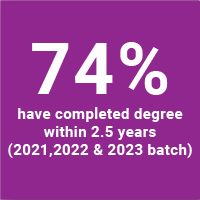
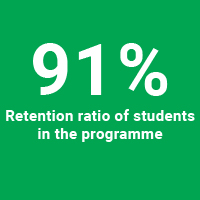
M.Tech. (Online) Programme Stats
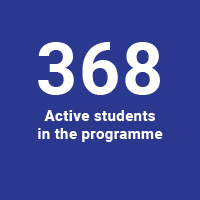
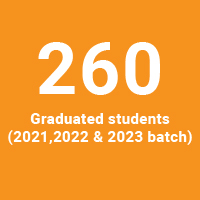
Fee Structure
Total estimated fees for a 3 year completion time. Fees are payable each term, based on credits enrolled.
Rs. 9.6 lac
for Artificial Intelligence
Rs. 8.9 lac
for Data Science and Business Analytics
Rs. 9.6 lac
for Electronics and Communication Engineering
M.Tech. (Online) Admissions 2026
Interested in joining? Ask your organization to nominate you for the program!
Is your organization not listed? Have your HR head or senior management contact us at office.iken@iisc.ac.in to on-board.
Important Dates for Admission 2026
- Nomination deadline for companies: 28 Feb,2026
- Portal opens for application submission by nominated candidates: 16 Mar, 2026 (Updated)
- Portal closes for applications: 1 Apr, 2026
- Invitations sent to applicants for online test: 17 Apr, 2026
- Online test for candidates for the three streams: 2 and 3 May, 2026
- Selection list shared with companies for shortlisting: 20 May, 2026
- Final selection list received from companies: 30 May, 2026
- Official offer of admission by IISc: 12 June, 2026
- Payment of fees and deposit by selected candidates: 14 July, 2026
- Start of classes: 1 Aug, 2026
Eligibility Criteria
Artificial Intelligence
Minimum Degree:
BE/BTech/BS(4yrs), in CS/ECE/EE or an equivalent discipline
Percentage:
At least 70% or equivalent in all degrees
Years in Industry:
Two years at the time of joining
Others:
Strong mathematical and programming experience
Selection:
Online test
Data Science and Business Analytics
Minimum Degree:
BE/BTech/BS(4yrs)/Equivalent 4-year degree/diploma after 12th standard (or) Master’s degree in any discipline
Percentage:
At least 60% or equivalent in all degrees
Years in Industry:
Two years at the time of joining
Others:
Strong mathematical and programming experience
Selection:
Online test
Electronics and Communication Engineering
Minimum Degree:
BE/BTech/BS(4yrs), in ECE/EE or an equivalent discipline
Percentage:
At least 60% or equivalent in all degrees
Years in Industry:
Two years at the time of joining
Others:
Strong mathematical and programming experience
Selection:
Online test
Syllabus for Written Test
All nominated candidates who have applied to the program and meet the eligibility criteria will be asked to attend an online written/programming test for the streams they have applied to.
Syllabus for Artificial Intelligence Written Test
Calculus: Limits, continuity and differentiability. Maxima and minima. Mean value theorem. Integration.
Linear Algebra: Matrices, determinants, system of linear equations, eigenvalues and eigenvectors, LU decomposition
Probability: Random variables. Uniform, normal, exponential, Poisson and binomial distributions. Mean, median, mode and standard deviation. Conditional probability and Bayes theorem.
Syllabus for Data Science and Business Analytics Written Test
Foundations: Linear Algebra/Matrices, Probability, Statistics and Combinatorics, Basics of calculus (up to partial differentiation and integration by parts), Coordinate Geometry at the undergraduate engineering mathematics level.
Programming: Data Structures (arrays, matrices, etc.) and Basic Programming of Classical Algorithms seen at the level of a first undergraduate programming class (debugging, finding errors, what prompt will result in minimum token usage etc).
The online written test will contain objective style questions (MCQ: single or multiple correct, Fill-in-the-blanks, Identify correct order, Identify bug, write a prompt etc). Total duration will be 60 mins.
Syllabus for Electronics and Communication Engineering Written Test
Engineering Mathematics
- Linear Algebra: Vector space, basis, linear dependence and independence, matrix algebra, eigen values and eigen vectors, rank, solution of linear equations – existence and uniqueness.
- Calculus: Mean value theorems, theorems of integral calculus, evaluation of definite and improper integrals, partial derivatives, maxima and minima, multiple integrals, line, Taylor series.
- Differential Equations: First order equations (linear and nonlinear), higher order linear differential equations, methods of solution using variation of parameters, complementary function and particular integral, partial differential equations, variable separable method, initial and boundary value problems.
- Vector Analysis: Vectors in plane and space, vector operations, gradient, divergence and curl
- Probability and Statistics: Mean, median, mode and standard deviation; combinatorial probability, probability distribution functions – binomial, Poisson, exponential and normal; Joint and conditional probability; Correlation and Random processes: autocorrelation and power spectral density, properties of white noise
Communications
- Information theory: entropy, mutual information and channel capacity theorem;
- Digital communications: digital modulation schemes, amplitude, phase and frequency shift keying (ASK, PSK, FSK), QAM, MAP and ML decoding, matched filter receiver, SNR and BER for digital modulation;
Signal Processing
- Continuous-time signals: Fourier series and Fourier transform representations, Laplace transform, sampling theorem and applications;
- Discrete-time signals: discrete-time Fourier transform (DTFT), DFT, FFT, Z-transform, interpolation of discrete-time signals;
- LTI systems: definition and properties, causality, stability, impulse response, convolution, poles and zeros, parallel and cascade structure, frequency response, Transient and steady-state analysis
- Basic control system components; Feedback principle; Transfer function; Block diagram representation;
HFCS
- Devices: Energy bands in intrinsic and extrinsic silicon; Carrier transport: diffusion current, drift current, mobility and resistivity;
- Analog circuits: Small signal equivalent circuits of diodes, BJTs and MOSFETs; Simple diode circuits: clipping, clamping and rectifiers; Single-stage BJT and MOSFET amplifiers: biasing, bias stability, mid-frequency small signal analysis and frequency response; Simple op-amp circuits
- Digital circuits: Number systems; Combinatorial circuits: Boolean algebra, minimization of functions using Boolean identities and Karnaugh map, logic gates and their static CMOS implementations, arithmetic circuits, multiplexers, Sequential circuits: latches and flip‐flops, counters, shift‐registers and finite state machines;
- Electromagnetic: Maxwell’s equations: differential and integral forms and their interpretation, boundary conditions, wave equation, Poynting vector; Transmission lines: equations, characteristic impedance, propagation constant, impedance matching, impedance transformation, S-parameters
Contact us
IISc’s Knowledge and E-Learning Network
Centre for Continuing Education
Indian Institute of Science
Bengaluru – 560 012
Phone: 080 – 2293 2508
E-mail: office.iken@iisc.ac.in