
Online Course on
From Data to Decisions: Machine Learning & AI for Real-World Science & Engineering
This hands-on course provides practical knowledge of data analysis, machine learning, and artificial intelligence for solving real-world science and engineering problems. Participants will learn data collection, preprocessing, statistical analysis, model development, evaluation, and deep learning techniques through practical assignments and projects, enabling them to derive meaningful insights and make data-driven decisions across various domains.
Course at a Glance
Know the Course Instructor
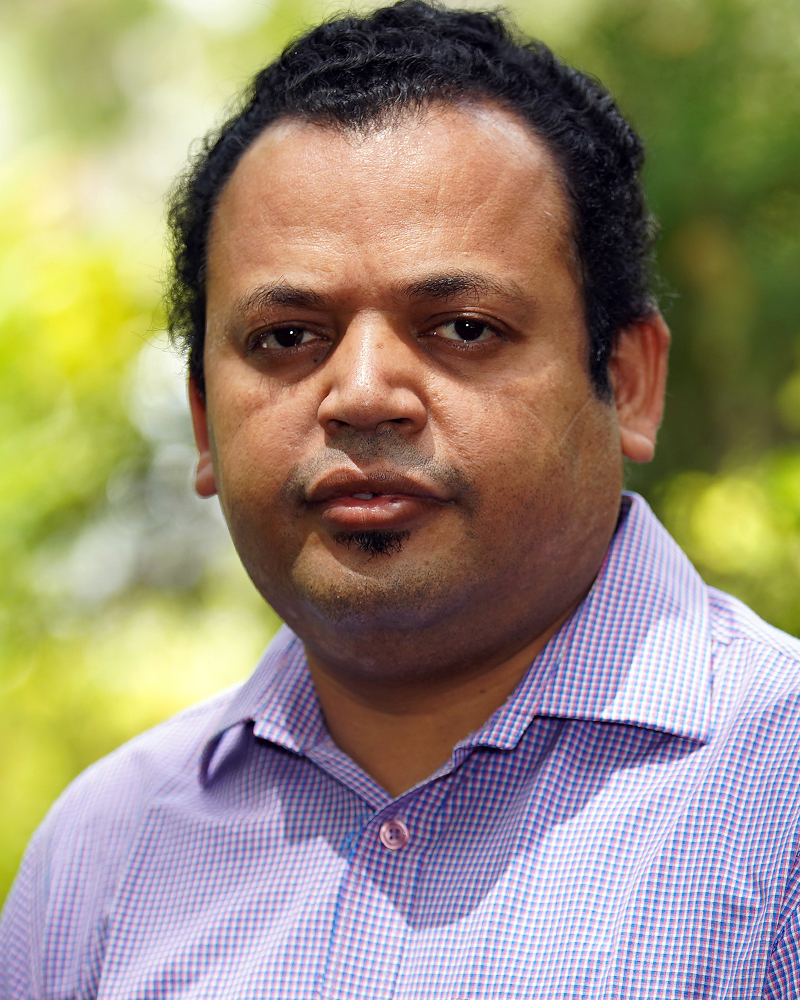
Lakshminarayana Rao
He is an Associate Professor at the Centre for Sustainable Technologies (CST), Indian Institute of Science (IISc), Bengaluru, with expertise in plasma science and engineering for sustainable environmental applications. Trained as a chemical engineer, he earned his Ph.D. from McGill University, Canada, and has over nine years of prior industrial experience in plasma technology development and commercialization. His research focuses on thermal and non-thermal plasma systems, plasma-activated water, decentralized water and wastewater treatment, and sustainable waste-to-energy processes, with applications spanning environmental remediation, public health, and resource sustainability. Dr. Rao has made significant contributions through high-impact research publications, patents, and technology demonstrations, particularly in plasma-based disinfection and wastewater recycling solutions suited for rural and resource-constrained settings. In addition to his research, he is actively involved in teaching and mentoring graduate and doctoral students, contributing to capacity building in sustainable technologies at IISc.
Objectives of the Course
This is a hands-on, application-driven course designed to equip participants with the skills to transform real-world science and engineering problems into data-driven solutions.
Going beyond theoretical concepts, the course takes participants through the complete journey—from understanding the underlying principles of data analysis and AI/ML, identifying and formulating problems, and acquiring and curating real-world data, to developing, evaluating, and interpreting machine learning models.
Through practical exercises and problem-solving, participants will learn not just what these tools do, but how and when to use them to extract meaningful insights and support informed decisions across diverse domains.
This is a hands-on course that takes participants beyond theory to the practical application of data analysis, machine learning, and artificial intelligence. Participants will work through the complete data-to-decision workflow, from acquiring and preparing real world data to developing, evaluating, and interpreting AI/ML models.
The course features eight practical assignments, and a final project addressing a real world problem built aroundnreal-world problems, spanning civil and environmental engineering, chemical engineering, mechanical engineering, and medical imaging.
Through learning by doing, participants will develop the skills and confidence to apply data-driven methods to complex problems in their own fields.
Course Syllabus
Course overview and objectives, links to reading material, online tools and books, importance of data-driven decision making, introduction to real-world problems in science and engineering.
Central Limit Theorem: introduction and its application, demonstration of central limit theorem, tutorial (basic tools, read different data types, python packages, visualization npackages, simple regression model building).
Understanding different data types continued, data collection methods, data quality and integrity, data curation and preprocessing techniques, A1 discussion (bengaluru rainfall data) climatology.
Basic statistical concepts, regression, inferential statistics and stastical tools for DA, A2 discussion (PCA) material science.
Understanding ML, Types of ML: supervised, unsupervised and reinforcement learning, introduction to ML models, A3 discussion (Supervised Learning).
Introduction to classsical ML, mathematical concepts of ML, decision trees and random forests, A4 discussion (Water quality data) environmental engineering.
Logistic regression for classification, introduction to neural networks, deep learning basics, CNN models, A5 discussion (Vehicle maintainance data) Mechanical engineering.
Types of CNN architectures, introduction to CNN, training a CNN model, A6 discussion (Brain tumor data) computer vision.
Types and architecture of CNN models, A7 discussion (Natural images) computer vision.
Advanced CNN architectures, self supervised learning, attention and transformers, A8 discussion (microplastics data) segementation.
In-context scheming, ethics in AI.
Who Can Apply & Who Can Benefit?
Who Can Apply?
- Graduates and Students in Engineering or Science are eligible
Who Can Benefit?
- Beneficial for students, research scholars, faculty members, practising engineers, scientists, and industry professionals who want to develop practical skills in data analysis, machine learning, and artificial intelligence.