
Online Course on
Advanced Certification Programme in Digital Manufacturing
The course introduces Gain industry-relevant expertise in modern digital manufacturing technologies, including automation, smart factories, Industrial IoT (IIoT), data analytics, and digital twins. This programme equips learners with the knowledge and practical skills needed to improve manufacturing efficiency, productivity, and innovation in the era of Industry 4.0
Course at a Glance
Know the Course Instructor
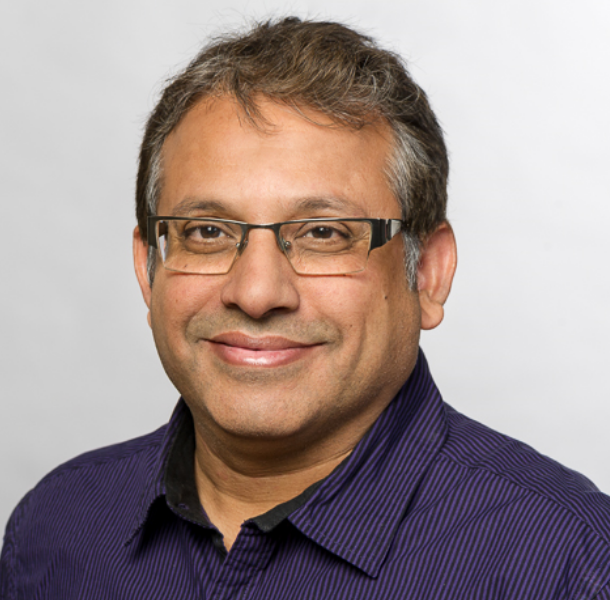
Prof. Amaresh Chakrabarti
Research Expertise: Design Synthesis and Creativity Eco-Design and Sustainability AI and Data Analytics Product Informatics Smart Manufacturing Biomedical Devices Sensors/Actuators
Senior Professor and Chair of Department of Design and Manufacturing (DM), IISc. He has published 39 books, over 370 peer-reviewed articles, and 13 patents. He founded IDeASLab, India's first Design Observatory at IISc. 27 of his papers won top paper awards in international conference. He co-initiated India's first indigenous Smart Factory, heads IISc-TCS Innovation Lab, IISc Press, Springer International Book Series Des Science & Innovation, chaired Smart Manufacturing Sub-committee, Bureau of Indian Standards. He received Careers360 2018 Faculty Award 'Most Outstanding Researcher' in Decision Sciences and is among the global top 2% researchers complied by Stanford University USA. He is an Honorary Fellow, Institution of Engineering Designers UK; Fellow, Design Society UK; Fellow, Design Research Society UK; Fellow, Indian National Academy of Engineering, and Honorary Doctorate in Engineering, Brunel University London, UK. He is Editor-in-Chief, AI EDAM Journal (CUP). He received Jawaharlal Nehru Doctoral Fellowship for University of Cambridge, TUM Ambassador Award from TU Munich Germany; Jubilee Professorship from Chalmers University of Technology Sweden; IISc Alumni Award for Research Excellence in Engineering and ASME Ruth & Joel Spira Outstanding Design Educator Award. He is the founding president of DeScIn - India's Academy of Design Sciences. His research interests include Design Synthesis, Eco-Design, AI and Data Analytics, Product Informatics, Smart Manufacturing and Biomedical Devices Sensors/Actuators.
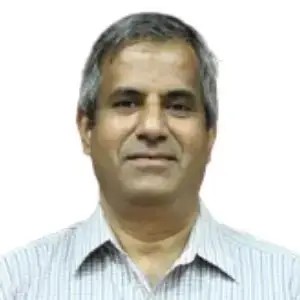
Prof. B Gurumoorthy
Research Expertise: Computer-aided design, Digital manufacturing, Computational metrology Product design
Senior Professor at the Department of Design & Manufacturing (DM) and Associate Faculty at the Department of Mechanical Engineering (ME) at IISc. He is a former chair of DM and erstwhile Chief Executive of the Foundation for Science Innovation and Development (FSID), IISc. He has been serving as Vice-Chair, Asia-Pacific, IFIP WG 5.1 on Global Product Development for the Whole Life Cycle since 2009. He holds six patents, and two technologies developed in his laboratory—Automatic Feature Recognition and Visual Interactive Solids—have been licensed to industry and are currently in active use. His research interests include CAD, Product Informatics, Computational Metrology, Computer-Aided Prototyping, and Product Design.
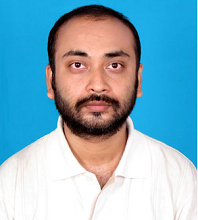
Dr. Abhijit Biswas
Research Expertise: Analogue and digital electronics, Power electronics, Embedded systems, Sensory and actuatory systems, Control systems, Spatiotemporal signal processing, Haptics, Biomedical engineering, Point-of-care technologies, Rehabilitation engineering, Mechatronics, Robotics, IoT, Renewable energy systems, Distributed transduction
Assistant Professor at the Department of Design and Manufacturing (DM), IISc. Before switching his career to teaching, he worked as Head of Research and Development at Abhipsita Technologies (India), and as Chief Technology Officer at Dynocardia Inc. (USA) and Merkel Haptics Systems, (a spinoff company from IIT Madras). His research interests include Biomedical Engineering, Manufacturing Engineering, Haptics, Electronics and Instrumentation, Power Systems, IoT and Embedded Systems.

Dr. Rina Maiti
Research Expertise: Human Factors Engineering, Biomechanics, Product Design, Medical Engineering, Rehabilitation Engineering, Occupational Health and Safety, Biosensor Design, Basic Medical Instrumentation, Work and Sports Engineering related Design
Assistant Professor at the Department of Design and Manufacturing (DM), and Faculty-in-charge of Human Engineering Research Laboratory at IISc. She has two patents to her credit. Her research interests include Human Factors Engineering, Biomechanics, Product Design, Medical Engineering, Rehabilitation Engineering, Occupational Health and Safety, Biosensor Design, Basic Medical Instrumentation and Work and Sports Engineering related Design.

Prof. Koushik Vishwanathan
Research Expertise: Advanced Manufacturing and Finishing Processes, Experimental Mechanics, Metrology, Theoretical Methods in Mechanics and Physics
Associate Professor at the Department of Mechanical Engineering (ME) and Associate Faculty at the Department of Design and Manufacturing (DM), IISc. His Lab develops processes and technologies related to metal additive manufacturing and ‘extreme’ mechanics (fracture, fragmentation and rapid solidification). His group has been working on DED-based technology for over seven years and have prototyped multiple (DED-based) machines. His research interests include Advanced Manufacturing and Finishing Processes, Experimental Mechanics, Metrology and Theoretical Methods in Mechanics and Physics.

Prof. Satyam Suwas
Research Expertise: Processing-Texture Relationship, Deformation and Thermo-Mechanical Processing, Microstructure-Mechanical Property Correlation, Additive Manufacturing
Senior Professor of Materials Engineering (MatE), Dean of Division of Mechanical Sciences and Associate Faculty at Department of Design and Manufacturing (DM) IISc. He also leads the research and projects at the Laboratory for Texture and Related Studies, dedicated to research in the field of crystallographic texture. He has published widely and has five patents to his credit. He is a Fellow of all National Academies in India, and is among the global top 2% researchers complied by Stanford University USA. His research interests include Processing-Texture Relationship, Deformation and Thermo-Mechanical Processing, Microstructure-Mechanical Property Correlation and Additive Manufacturing.

Dr. Thulasi Raman K H
Research Expertise: Additive Manufacturing Machine and Process Development, Electron Beam and Plasma Processing of Materials, Novel Material Processing System Design, Thin Film Materials, Surface and Interface Analysis, Novel Process Monitoring Instrumentation, Plasma Electrolytic Polishing
Integrated Programme Lead at the Centre of Excellence for Additive Manufacturing, IISc. He is also the Head of Technology – Process Engineering, Vacuum Technology, Equipment and Plant Design, Thin-Film Engineering (PVD/CVD), Advanced Equipment Technology and Manufacturing. His research interests include Additive Manufacturing Machine and Process Development, Electron Beam and Plasma Processing of Materials, Novel Material Processing System Design, Thin Film Materials, Surface and Interface Analysis, Novel Process Monitoring Instrumentation and Plasma Electrolytic Polishing.
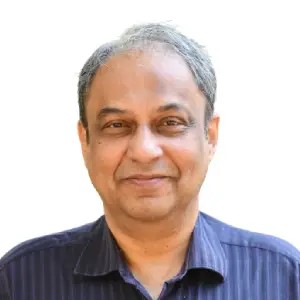
Prof. Ashitava Ghosal
Research Expertise: Kinematics, Dynamics, Control and Design of Robots and other Computer controlled Mechanical Systems, Theoretical and Numerical Investigations of Non-linear Dynamical Systems, Kinematics of Parallel Mechanisms and Manipulators, Design of Mechanical Systems, Biomedical devices, CAD/CAM
Senior Professor at the Department of Mechanical Engineering and Associate Faculty at the Department of Design and Manufacturing, IISc. He has 5 patents, more than 175 publications in archival journals and in national and international conferences. He is a Fellow of the Indian National Academy of Engineering. His research interests include Kinematics, Dynamics, Control and Design of Robots and other Computer controlled Mechanical Systems, Theoretical and Numerical Investigations of Non-linear Dynamical Systems, Kinematics of Parallel Mechanisms and Manipulators, Design of Mechanical Systems, Biomedical devices and CAD/CAM.

Haresh Dagale
Research Expertise: Embedded systems, TCP-IP Networking, Wireless Networking, VoIP, Audio-Video Streaming, Security & Reliability Issues in Cyber-Physical Systems, IoT
Principal Research Scientist with the Department of Electronic Systems Engineering (DESE), IISc. He is an acknowledged expert in Communication Networks and Embedded Systems. He is passionate about developing IoT solutions for Healthcare and SmartGrid applications. He has worked on various industry and government-sponsored projects. His research interests include Embedded systems, TCP-IP Networking, Wireless Networking, VoIP and Audio-Video Streaming.

Prof. G K Ananthasuresh
Research Expertise: Compliant Mechanisms, Design Optimization, Topology Optimization, Mechanisms and Kinematics, MEMS, Biomechanics, Micromanipulation, Protein Design
Senior Professor and former Chair of the Dept. of Mechanical Engineering and the Dept. of Bio Systems Science and Engineering (BSSE), and an Associate Faculty at the Department of Design and Manufacturing, IISc. A recipient of the Shanti Swarup Bhatnagar Award (2010) for Engineering Sciences, he also heads the Multidisciplinary and Multi-scale Device and Design Lab (M2D2) at IISc. He is a Fellow of the Indian National Academy of Engineering, and is among the global top 2% researchers complied by Stanford University USA. His research interests include Compliant Mechanisms, Design Optimization, Topology Optimization, Mechanisms and Kinematics, MEMS, Biomechanics, Micromanipulation and Protein Design.

Prof. Vishal Singh
Research Expertise: Building Information Modeling, Digitalization, Industry 4.0 and smart manufacturing for Built Environment, Productization and products for Built Environment (modular construction, building accessories and equipment)
Professor at the Department of Design and Manufacturing (DM), IISc. He chairs the Board of Visualynk, a Finland based firm offering Cloud-based SaaS solutions for efficient management & utilization of facility management data. Before IISc, he held faculty position at Aalto University Finland and as Director of Innovation at Helsinki Metropolia University Finland. His research interests include Building Information Modelling, Design Computing and Cognition, Elements of Design, Multidisciplinary Collaboration, Systemic Innovation and Product Service Systems

Dr. T V Prabhakar
Research Expertise: Networked Embedded Systems, Energy Harvesting Sensors, IoT systems
Chief Research Scientist at the Department of Electronic Systems Engineering (DESE), IISc and Principal Investigator for IISc’s MSME Centre of Excellence. He works in Networked Embedded Systems where he focuses on hardware system design, micro energy harvesting systems and power management algorithms. Dr Prabhakar leads the effort in Zero Energy Networks Laboratory (Zenlab) at DESE, IISc, on building embedded electronic systems. The application areas include Airplane cabin, Industrial IoT, Air Quality, Tactile Internet applications, and AI for IoT applications. The laboratory has produced RFID and IMU based localization algorithms.
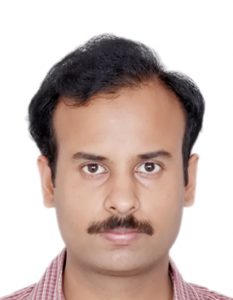
Prof. Chandramani Singh
Research Expertise nnCommunication Networks, Game Theory, Stochastic Control
Associate Professor at the Department of ESE, IISc Bengaluru. He has ME and PhD degrees in electrical communication engineering from IISc Bengaluru. Previously, He was a Research Engineer at INRIA Rocquencourt and a Post-Doctoral Researcher at CSL, University of Illinois Urbana-Champaign, USA. His research interests include communication networks, stochastic control and learning, and game theory.

Prof. Manish Arora
Research Expertise nnCavitation, biomedical devices and multi-material additive manufacturing
Associate Professor at the Department of Design and Manufacturing, IISc. He is the Principal Investigator of UTSAAH Lab, which aims at developing affordable and accessible medical technology solutions for promoting universal healthcare. Prior to joining IISc, he worked at the University of Oxford, GE Global Research and Nanyang Technological University. He has over 100 research publications and patents. He is also co-founder of Open MedLabs Pvt. Ltd. and Periwinkle Labs Pvt. Ltd. His research areas of interest include design of biomedical devices and multi-material additive manufacturing.

Dr. Abhra Roy Chowdhury
Research Expertise
Bioinspiration, biomimetics, robotics, automation, human-robot collaboration
Assistant Professor at the Department of Design and Manufacturing, IISc. Prior to joining IISc, Dr. Roy Chowdhury was a Senior Research Fellow in Autonomous Mobile Robotics with the Temasek Labs at Singapore University of Technology and Design (SUTD). He also worked as a Senior Engineer at Product Platform Hub, LG Electronics India. At IISc, he leads the Robotics Innovations Lab (RIL). His research includes mechatronics, bioinspiration, and biomimetics, and focuses on robotics, automation, and human-robot collaboration.
Objectives of the Course
The Digital Manufacturing Programme offered by CCE-IISc prepares professionals to lead Industry 4.0 innovation and drive digital transformation in factories.
The programme covers fundamental concepts, key technologies, technology demonstrations, and practical applications with modules in Digital Manufacturing, Industry 4.0, AI/ML, IoT & Digital twin, AR/VR/MR/Haptics, Robotics and Autonomous system, Electronics and mechatronics, Additive Manufacturing, Design for Additive manufacturing and Cybersecurity.
The programme is offered in online mode over 20 weeks.
In addition, experiential learning is provided with Lectures demonstrations, live experiments and projects implemented at the IISc Smart Factory and other labs at IISc during 6 full days of IISc Campus Visit.
Course Syllabus
Digital Manufacturing
Digital manufacturing is the use of integrated, computer-based systems such as simulation, data analytics, connectivity, and automation to design, plan, execute, and optimize physical production processes across the product lifecycle. It acts as the bridge between the virtual (design/data) world and the physical shop floor. It enables real-time visibility into production, predictive decision-making instead of reactive fixes, and tighter feedback loops between design, engineering, and manufacturing. Typical Applications include Product design & validation, Production planning, Process monitoring & control, Predictive maintenance, Traceability. The module will cover the following topics with emphasis on fundamentals and applications:
• CAD and CIM
• Computational metrology, Factory simulation
Industry 4.0 Fundamentals
Industry 4.0 is the fourth industrial revolution integrating IoT, cyber-physical systems, cloud computing, and AI into manufacturing to create smart, self-optimizing factories. It connects physical and digital systems, enabling autonomous decision-making, real-time data flow, and end-to-end integration across the factory and supply chain. Typical applications include Smart factories, Predictive maintenance and Digital twins. The module will cover the following topics with emphasis on fundamentals and applications:
• Frameworks and Technologies
• Protocols and standards
Electronics and Mechatronics
Mechatronics is the integration of mechanical engineering, electronics, computer control, and software to design and build intelligent systems and products. In industry 4.0, electronics provides the sensors that capture real-time data from machines and processes, while mechatronic systems including motors, actuators, and controllers use this data to perform precise, programmable actions. Typical applications include PLCs & embedded control systems, Vision-based inspection, Automated warehousing & smart packaging. The module will cover the following topics with emphasis on fundamentals and applications:
• Mechatronics for digital manufacturing
• Sensors and Actuators for digital manufacturing
AI, ML Analytics
AI (Artificial Intelligence) is the simulation of human-like reasoning and decision-making by machines. ML (Machine Learning) is a subset of AI where systems learn patterns from data to make predictions or decisions without explicit programming. In industry 4.0, AI, ML analytics acts as the“brain” that turns raw IIoT/sensor data into actionable insights. It enables predictive and prescriptive decision-making instead of reactive responses. Typical applications include Predictive maintenance, quality control, Process optimization, Autonomous scheduling. The module will cover the following topics with emphasis on fundamentals and applications:
• Artificial Intelligence
• Machine Learning and Data Analytics n
IoT and Digital Twin
In industry 4.0, IoT acts as the data collection and connectivity backbone, linking machines, sensors, and systems across the factory floor. Digital Twins is a virtual, real-time replica of a physical asset provide a virtual testing and monitoring environment, mirroring real-world behaviour for analysis and simulation. Together, they enable real-time visibility, remote monitoring, and predictive insight into physical operations. Typical applications include remote asset monitoring, product lifecycle management, smart factory monitoring. The module will cover the following topics with emphasis on fundamentals and applications:
• Internet of Things
• Digital Twins
AR/VR/MR Haptics
AR (Augmented Reality) overlays digital information (instructions, data, visuals) onto the real-world view, typically via smart glasses or tablets. VR (Virtual Reality) immerses users in a fully simulated digital environment, isolating them from the physical world. MR (Mixed Reality) blends real and virtual elements, allowing digital objects to interact with the physical environment. Haptics refers to technology that provides tactile feedback (touch, force, vibration) to simulate physical sensation in digital interactions. Their role in Industry 4.0 is to enhance human-machine interaction by making complex data intuitive and visual, support training and skill transfer without risk to real equipment or personnel and enable remote collaboration and expert assistance across locations. Typical applications include assembly guidance, remote maintenance & support, training & simulation, haptic-enabled robotic control, and ergonomic & safety monitoring. The module will cover the following topics with emphasis on fundamentals and applications:
• Virtual / Augmented /mixed reality
• Haptics
Robotics and Autonomous Systems
Robotics is the branch of engineering focused on designing, building, and operating machines capable of performing tasks automatically or semi-automatically. Autonomous Systems are machines/robots capable of sensing their environment, making decisions, and acting without continuous human control, using onboard sensors, AI, and control algorithms. In Industry 4.0, it serves as the physical execution layer that carries out data-driven decisions from digital systems, enables autonomous, flexible, and precise manufacturing operations with minimal human intervention, and works in tandem with AI/ML and IoT—sensing data, processing it, and acting on it in real time. Typical applications include Industrial Robots, Collaborative Robots (Cobots), Autonomous Mobile Robots (AMRs) & AGVs, and Autonomous Drones. The module will cover the following topics with emphasis on fundamentals and applications:
• Industrial and Collaborative Robotics
• Autonomous system
Additive Manufacturing
Additive Manufacturing (AM), commonly known as 3D printing, is the process of building physical objects layer-by-layer directly from digital 3D models, as opposed to traditional subtractive (machining) or formative manufacturing methods. In Industry 4.0, it bridges digital design and physical production, enabling direct “data-to-part” manufacturing, supports rapid prototyping and design iteration without tooling changes, and enables decentralized, on-demand production close to the point of need. Typical applications are rapid prototyping, tooling and fixture, and low volume production. The module will cover the following topics with emphasis on fundamentals and applications:
• Polymer Additive Manufacturing
• Metal Additive Manufacturing
Design for Additive Manufacturing
Design for Additive Manufacturing (DfAM) is a design approach and methodology that optimizes part geometry, structure, and function specifically to exploit the unique capabilities of 3D printing, rather than simply adapting designs originally intended for traditional manufacturing. In industry 4.0, its roles maximize the value of additive manufacturing by aligning design intent with AM's layer-by-layer build capabilities, enables lightweighting and part consolidation, reducing assembly complexity and material use, reduces development cycles by allowing design freedom not constrained by traditional tooling limitations. Typical applications are Topology optimization, Part consolidation, lattice structure, generative design and functional integration. The module will cover the following topics with emphasis on fundamentals and applications:
• Shape, Metal and Product Representation; Topology Optimization
• Design Principles, rules and guidelines for Additive Manufacturing
Cybersecurity
Cybersecurity in Industry 4.0 refers to the protection of interconnected industrial systems, networks, data, and devices spanning both IT (Information Technology) and OT (Operational Technology) from unauthorized access, cyberattacks, and data breaches. In Industry 4.0, cybersecurity secures the convergence of IT and OT systems, which were traditionally isolated but are now interconnected via IIoT. Safeguards sensitive data — product designs, process parameters. Ensures the integrity and trustworthiness of data feeding AI/ML, analytics, and digital twin systems. The module will cover the following topics with emphasis on fundamentals and applications:
• Concept and Technologies
• Protocol and standards
Who Can Apply & Who Can Benefit?
Who Can Apply?
- B.Tech (Mechanical, Electrical, Civil, Electronics and Communications)
- PhD. Master’s Students (include M. Tech Online students also if applicable)
Who Can Benefit?
- Manufacturing professionals and engineering graduates seeking to build expertise in digital manufacturing and Industry 4.0.
Course Fee
Class Schedule
Ready to Enroll?
Apply online at iisc.online · New batches every semester