
Online Course on
Agentic AI Coding: From Specification to Deployment (Cohort 2)
This course provides hands-on training in Agentic AI coding, covering large language models, autonomous AI agents, specification driven development, and full-stack application development. Participants will learn to build, test, evaluate, and deploy AI-powered applications using modern tools, cloud technologies, and multi-agent systems.
Course at a Glance
Know the Course Instructor
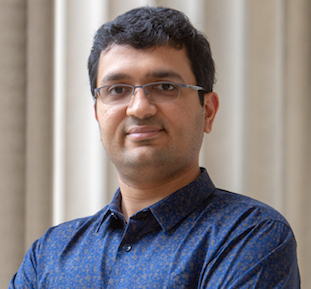
Deepak Subramani
He is an Associate Professor in the Department of Computational and Data Sciences at the Indian Institute of Science (IISc), Bengaluru, where he leads the QUEST Lab. His research focuses on scientific machine learning, multimodal AI, foundation models, physical intelligence, and neural data assimilation, with applications in engineering, environmental systems, and AI for social good. He received his Ph.D. from the Massachusetts Institute of Technology (MIT) and has been recognized for both his research and excellence in teaching at IISc.
Objectives of the Course
Participants will learn how large language models and agents work, from tokens to multi-agent patterns and MCP. They will master agentic coding harnesses and specification-driven development, and take an application from idea to cloud with tests, Cl/CD, Terraform and recovery drills.
They will add agentic features to an existing codebase, including a planner agent with search tools, while managing cost and permissions. They will evaluate Al systems lthe way industry teams do, with tracing, error analysis, LLM-as-judge and golden sets. They will design new systems, choosing between code, workflows, agents and retrieval-augmented generation, and present their own deployed project.
Course Syllabus
From LLMs to autonomous agents : How large language models actually work, from tokens to foundation models. What turns a chatbot into an agent: the perceive, reason, act and verify loop. Tool calls, MCP, and the workflow, single-agent and multi-agent patterns used in industry today.
Agentic coding harnesses and specification-driven development : Claude code's agentic loop, traced call by call. The four control surfaces every serious user needs: prompt, context, loop and graph engineering. Then the discipline that separates engineers from vibe coders: writing production-grade specifications, deriving tests from them, and catching spec drift before it costs you. You stay the architect. The agent is the contractor.
From idea to full-stack application : Build a real trip-planning web app from four specifications: goal, frontend, backend and API contract. Review the specs together, plan the build in phases with clear definitions of done, and verify every phase. You start your own project this week.
Testing, CI/CD and cloud deployment : Ship like a production team. Unit, integration and browser tests written from acceptance criteria, and checks that catch the agent's own mistakes. CI/CD pipelines, infrastructure as code with terraform, debugging HTTPS and CORS in the cloud, and backup and restore drills.
Adding agentic AI features : Brownfield development: adding AI to a codebase that already works. A natural-language trip creator, and a planner agent that researches with search tools while the user stays in control. Tool contracts, permission and failure handling, moving a project between harnesses, and keeping model costs and reasoning effort in check.
Evaluating agentic systems : The skill most AI teams are short of. The analyze-measure-improve loop, tracing with Arize Phoenix, and error analysis through open and axial coding. You also cover code-based checks and LLM-as-judge calibrated against expert labels, golden sets for regression, and choosing the right model for your quality and cost.
High-Level system design with agentic Al : Think like a system architect. C4 architecture views, deciding when a task needs plain code, a workflow or an agent, and the minimal viable agent. You also design for failure, decide when multiple agents are worth it, and build retrieval-augmented generation with keyword, vector and hybrid search. You present your final project, deployed and live.
Campus visit at IISc Bengaluru, individual project.
Who Can Apply & Who Can Benefit?
Who Can Apply?
- B.Tech, BCA, B.Com (Students are also allowed)
Who Can Benefit?
- Software Professionals in the product/service industry, Start-Ups, Nationa Labs, Academic Institutions, UG, PG and Research Students Or Staff, Career Break Individuals Anyone aspiring to join the AI industry