Online Course on
SciComm 101
SciComm 101 is an essential course designed to develop essential science communication skills through news writing, storytelling, pitching ideas to publications, and visual communication. The course is being offered by office of communications, Indian Institute of Science (IISc).
Course at a Glance
Know the Course Instructor
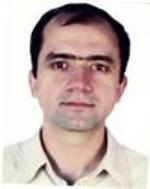
Prof. Kaushal Verma
Professor Kaushal Verma is a faculty member in the Department of Mathematics at the Indian Institute of Science (IISc), Bengaluru. He holds a Ph.D. from Indiana University and specializes in several complex variables and complex analysis. His research focuses on holomorphic mappings, complex geometry, and related mathematical theories. He contributes to advanced mathematical research, academic teaching, and mentoring students in higher mathematics.
Objectives of the Course
The course will have six sessions over two days. It will focus on news writing, weaving narratives, pitching your stories to publications, communicating science through visual storytelling, communicating science using art and storyboarding for graphical abstracts and posters.
The course covers a wide ranging of avenues through which science can be communicated to the wider public in a format that is palatable.
Course Syllabus
News Writing: This session will focus on the basics of science writing, identifying newsworthy stories and breakthrough research, interviewing scientists, choosing headlines/ledes, and writing a clear, factual, and engaging science news story.
Pitching your story: This session will focus on developing story ideas and pitching them to publications. A pitch is a summary and is usually the first piece of your writing an editor will see. Hence, writing a good pitch is paramount. The session will also focus on first contact protocols and etiquettes.
Weaving narratives: The session will focus on writing feature articles, emphasizing the methodology, structure and the power of words. The anchor of the session will be the power of narratives, finding an 'angle' and its ability to shape the world. It will cover long-form journalism, bias, structuring, writing with texture and clarity, feedback, and ethics.
Science communication using art: This session examines how scientific concepts can be conveyed using differentnart forms ranging from music, folk tales, and folk arts to modern art. This session tries to push disciplinary boundaries by bringing scientific principles to the people via a popular or more digestible medium.
Visual Storytelling: This session will focus on why visuals matter and how science communicators can adapt scientific ideas and research stories into visual formats like comics, illustrated explainers, infographics, social media carousels, and short-form videos. Topics will include: Why visuals work, directing attention, finding & framing the core story, visual formats and accuracy and ethics.
Storyboarding for graphical abstracts and posters Complex research is often simplified using figures, graphical abstracts, or posters. However, a good graphical abstract or poster is more than just a collection of figures and text – it narrates a clear scientific story. The course is designed to help researchers plan their text and visuals before designing them using the technique of storyboarding. By the end of the course, participants will have developed their own storyboard for a graphical abstract or poster and will have a framework they can use to plan future scientific visuals.
Who Can Apply & Who Can Benefit?
Who Can Apply?
- Teachers, journalists, students and those working in science communication.
Who Can Benefit?
- Anyone interested in science communication. Journalists, teachers, scicomm workers, entrepreneurs, students etc.