
Online Course on
Workshop on Signal Processing for High-Precision Navigation and Surveillance
This short course is designed to provide a strong technical foundation in Signal Processing for High-Precision Navigation and Surveillance for academic researchers, industry professionals, scientists, and BTech/MTech/Ph.D. students. The program covers INS/GNSS integration, Kalman filtering, radar signal processing, SAR, multi-sensor data fusion, AI-enabled estimation, and modern SLAM techniques for aerospace and autonomous systems. Emphasis will be placed on both theoretical understanding and practical applications including UAV navigation, surveillance, target tracking, and autonomous sensing systems. Participants are expected to gain the background necessary for advanced work in navigation, estimation, and surveillance systems.
Know the Course Instructor

Prof. Radhakant Padhi
He is an expert in aerospacennavigation, state estimation, and intelligentnguidance systems. His work includes INS/GNSSnintegration, Kalman filtering, autonomousnsystems, and advanced navigation technologiesnfor DRDO and ISRO missions.
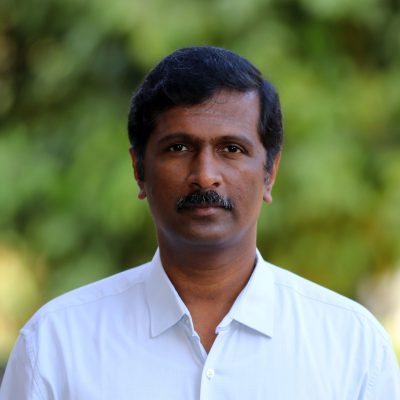
Prof. Suresh Sundaram
He is a Professor at Aerospace Engineering and Chair, Cyber-Physical System, IISc, Bangalore. His research interests are in Intelligent flight control system, Autonomous Systems, Applied Game Theory, Computer Vision and Robotics, Machine learning and AI.
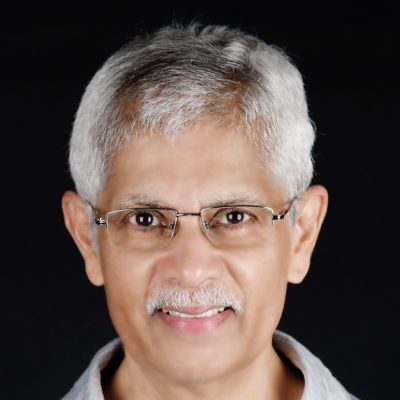
Prof. Vijay Kumar
He is an Honorary Professor, ECE Dept., IISc, Bangalore. He has expertise in algebraic coding theory and related areas, with application to wireless communication, data storage and satellite navigation systems.
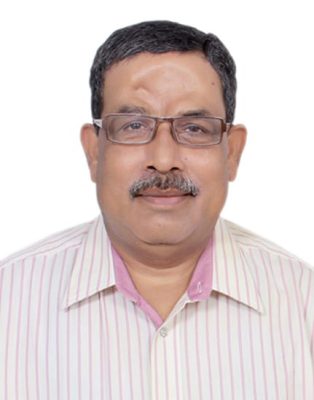
Dr. Tapan Mishra
He was the former Director of Indian Space Research Organization (ISRO), Space Applications Centre (SAC) and Physical Research Laboratory (PRL). He is a global expert in Imaging Radar SAR (Synthetic Aperture Radar). His research involves SAR design, signal processing, motion compensation of airborne SARs, NF antenna measurement, MW measurements, data compression and single pixel classification of hyperspectral imager.
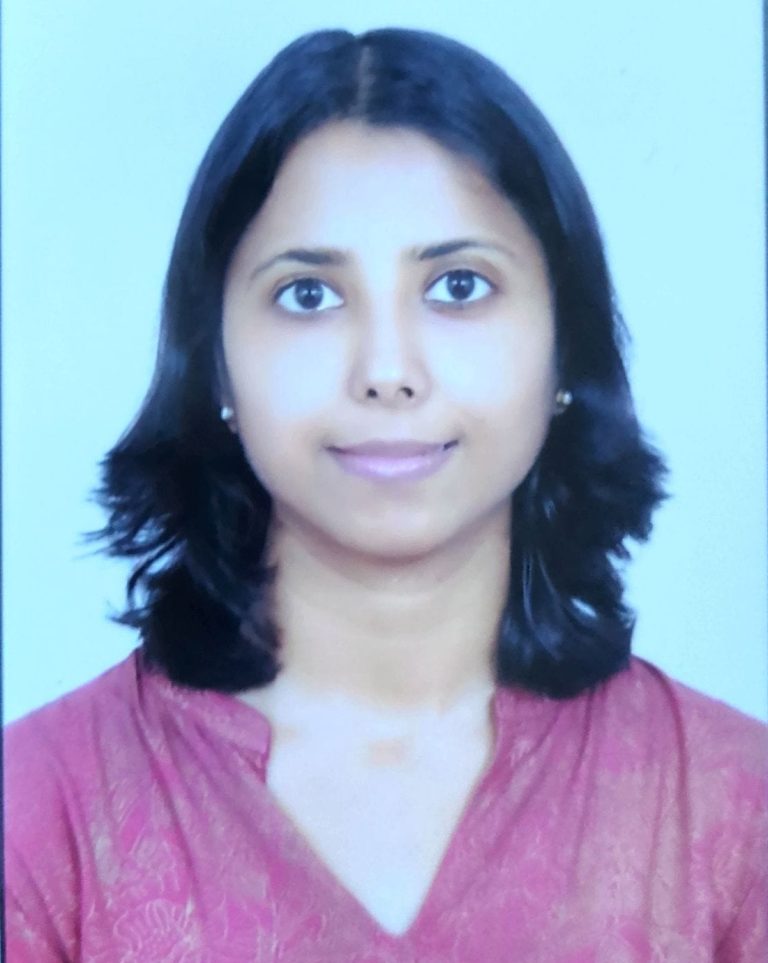
Dr. Megha Maheswari
She is a scientist at the U R Rao Satellite Centre (URSC), Indian Space Research Organisation (ISRO), Bengaluru. She is an expert in Navic broadcast parameter generation and ionosphere modelling.
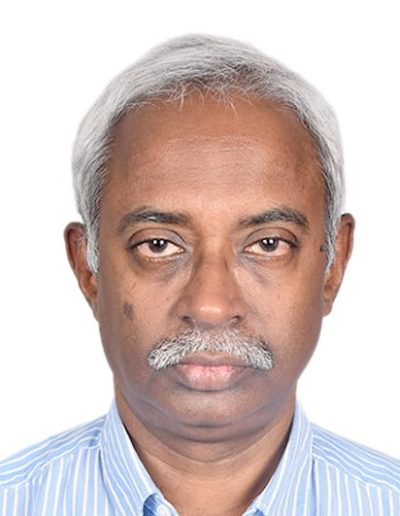
Dr. A. Vengadarajan
He formerly served at the Electronics and Radar Development Establishment (LRDE), Defence Research and Development Organisation (DRDO). He has an excellent hold on Radar Systems in general.
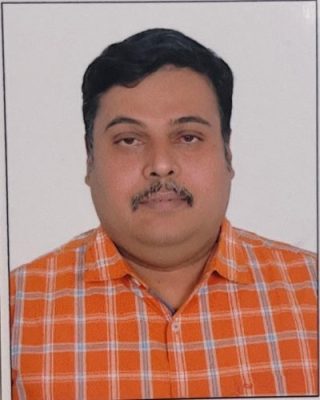
Mr. Senthil Rangarajan
He is a scientist at LRDE, DRDO, with expertise in conventional radar signal processing. He has been actively involved in the development of radar systems and related signal processing techniques.
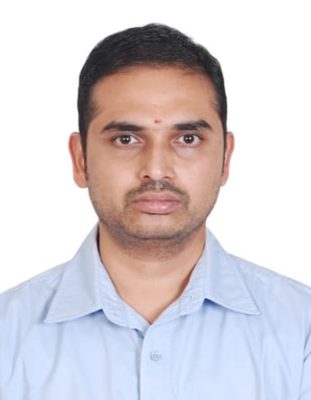
Dr. R. S. Narasimhan
He is a scientist at the Electronics and Radar Development Establishment (LRDE), Defence Research and Development Organisation (DRDO). He has expertise in AI Based radar signal processing.
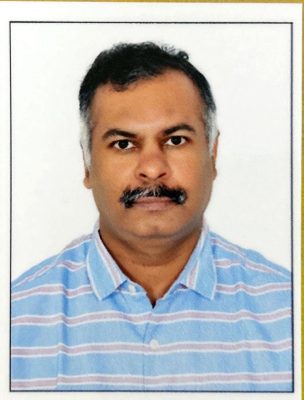
Dr. R. Rajesh
He is a scientist at the Centre for Airborne Systems (CABS), Defence Research and Development Organisation (DRDO), Bengaluru. He has expertise in Information theory, Radar, Energy harvesting, Multiple access channels joint source channel coding.

Dr. Kumar Vijay Mishra
He works as a Senior Fellow at the US Army Research Laboratory, Adelphi, USA. He is an established expert on Low-Altitude, Slow-Speed and Small (LSS) Targets using Radars. He is also a renowned author of several publications and a book in this domain.
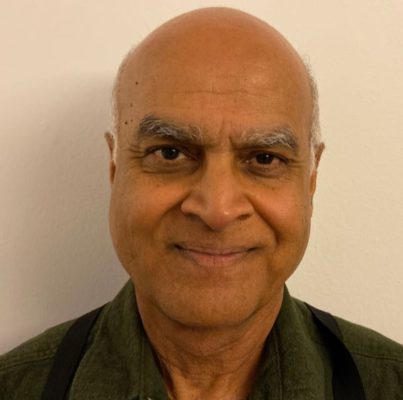
Dr. P. K. Menon
Dr. P. K. Menon, Optimal Synthesis Inc., USA is a renowned expert in optimal control and state estimation techniques and has solved numerous practical problems for guidance and control of aerospace vehicles as well as target estimation.
Objectives of the Course
Provide in-depth knowledge of signal processing for navigation, including Inertial Navigation Systems (INS), Global Navigation Satellite Systems (GPS/GNSS). It will also include their error characteristics and mitigation strategies. Applications will include Missiles, UAVs, and Robots.
Understanding of radar fundamentals and radar signal processing, both conventional and AI-based techniques.
Synthetic Aperture Radar (SAR) technology and associated signal processing for weather-insensitive high-resolution surveillance and environmental imaging. This will include emerging drone-borne SAR platforms.
An exclusive lecture on the detection of Low-Altitude, Slow-Speed, Small (LSS) targets using radars, which is a niche technology.
Introduce state-estimation theory and practice using Kalman filtering and its variants, focusing on INS-GNSS integration, nonlinear estimation, and reliable operation in uncertain environments, as well as present methodologies for multi-target tracking and multi-sensor data fusion to enable robust surveillance, situational awareness, and coordinated sensing.
Demonstrate the role of artificial intelligence in aerial perception and estimation, including recurrent learning approaches and modern SLAM techniques such as 3D Gaussian Splatting for autonomous navigation.
Highlight real-world aerospace and defense applications through case studies discussion, including UAV navigation, drone-based sensing, and tracking systems.
Community Building: Foster collaboration among researchers and industry professionals.
Professional Development: Equip participants with cutting-edge theory, simulation and case studies in relevant applications, aiding workforce development.
Course Syllabus
Introduction and Motivationn
Overview of Sensors for Navigation
Reference Frames and Coordinate Transfer
Inertial Navigation Systems (INS)
Global Positioning Systems (GPS)
State Estimation Using Kalman Filters
INS-GPS Fusion using Kalman Filters
Recurrent Network in Estimation
3D Gaussian Splatting based SLAM
Ranging Codes for Satellite Navigation System
Synthetic Aperture Radar (SAR) Technology
Drone Borne SAR
NavIC Error Mitigation Techniques
Overview of Radars
Radar Signal Processing
Multi-Sensor Data Fusion for Surveillance
Detection of Low-Altitude, Slow-Speed and Small (LSS) Targets
State Estimation for Multi-Target Tracking
Who Can Apply & Who Can Benefit?
Who Can Apply?
- B.Tech (Graduated students preferred, but 3rd and 4th year students are also eligible to apply, seats subject to availability)
Who Can Benefit?
- B.Tech graduates, senior undergraduate students, researchers, and professionals interested in signal processing, navigation, surveillance, and related technologies.
Class Schedule
Course Fee
| Course Fee per Participant | Professional | Students | ||
|---|---|---|---|---|
| Industry* / R&D Labs | Institutes / Universities | PhD | M.Tech / B.Tech / Project Staff | |
| Until 25 June 2026 | ₹30,000 | ₹24,000 | ₹18,000 | ₹12,000 |
| After 25 June 2026 | ₹35,000 | ₹30,000 | ₹22,000 | ₹15,000 |
1. 18% GST will be additional.
2. Professionals from DPIIT registered start-ups will get a 30% discount.
Ready to Enroll?
Apply online at iisc.online · New batches every semester